Less searching, less stress, more time with your family. Here’s how to transform your kitchen into a space that works hard for you — every single day.
The average parent spends over an hour a day in the kitchen. An organized kitchen doesn’t just look better — it gives you that time back, reduces daily stress, and makes feeding your family genuinely easier.
It’s 6:15pm on a Tuesday. You’ve just walked in from work, the kids are hungry, homework is undone, and you need to get dinner on the table in 30 minutes. You open a cabinet looking for the pasta — and three things fall out. You can’t find the colander. The spice you need is buried behind six others you never use. The pan you want is under two other pans that have to come out first.
Sound familiar? For most busy families, the kitchen is the most used and most chaotic room in the house. Not because the family is disorganized — but because the kitchen was never set up to handle real family life. The good news is that a few smart changes, done once and maintained with simple habits, can completely transform how your kitchen feels and functions. This guide walks you through every step.
Why most kitchen organization attempts fail
Most people tackle kitchen organization the wrong way. They buy a set of matching containers, spend a Saturday reorganizing everything, feel great about it — and then watch it gradually unravel over the following two weeks until it’s back to where it started. The problem isn’t effort. It’s approach.
Sustainable kitchen organization isn’t about having the prettiest pantry on the internet. It’s about designing a system that’s easy enough for every member of the family to maintain without thinking about it. If putting something away requires more than two seconds of thought, it won’t get put away consistently. The goal is a kitchen where everything has an obvious, logical home — and returning things to that home is effortless.
The golden rule
Organize for how your family actually lives, not for how you wish you lived. If your kids always leave snacks on the counter, build a designated snack zone there. Work with your habits, not against them.
Step one: the great declutter
Before you organize a single thing, you need to remove everything that doesn’t belong. This step is non-negotiable — you cannot organize clutter. You can only move it around.
Pull everything out of your cabinets, drawers, and pantry. Every single item. Lay it out on the counter and table and look at what you actually have. You will find duplicates (four wooden spoons, three bottle openers), expired pantry items, gadgets you bought with good intentions and never used, and items that belong in other rooms entirely. Be ruthless. If you haven’t used it in six months and can’t think of a specific upcoming occasion when you will, it goes.
For families with children, this step also reveals kid-related clutter — plastic cups from fast food restaurants, novelty utensils, mismatched containers with missing lids. These are organizational dead weight. Keep only what gets used regularly and let the rest go.
1-Empty everything out
Clear every cabinet, drawer, and shelf completely. You need to see what you’re working with.
2-Sort into keep, donate, discard
Be honest. If it hasn’t been used in 6 months, it probably doesn’t need to stay.
3-Check expiry dates in the pantry
Most families are surprised how many expired items they find. Clear them out completely.
4-Match containers to their lids
Any container without a matching lid gets donated or recycled. No exceptions.
Zone your kitchen like a professional
Professional kitchens are organized by zones — specific areas dedicated to specific tasks. Everything needed for that task lives in that zone. Home kitchens benefit enormously from the same thinking, especially when multiple family members are using the space at different times.
Think about the main activities that happen in your kitchen: cooking, prepping food, making drinks, packing school lunches, storing snacks, cleaning up. Each of these should have a dedicated zone, and everything related to that activity should live within or near that zone. Pots and pans near the stove. Knives and cutting boards near the prep area. Plates and glasses near the dishwasher for easy unloading.
Cooking zone
Pots, pans, oils, spatulas, and spices — all within arm’s reach of the stove.
Prep zone
Cutting boards, knives, peelers, and mixing bowls near your main counter workspace.
Drinks zone
Coffee maker, kettle, mugs, glasses, and kids’ cups all grouped in one spot.
Lunch-packing zone
Lunch boxes, snack bags, containers, and school snacks together for fast morning packing.
Snack zone
A low, accessible shelf or basket kids can reach themselves — reduces constant requests.
Cleaning zone
Dish soap, sponges, cloths, and cleaning sprays all in one place under the sink.
Conquering the cabinets and drawers
Cabinets and drawers are where kitchen organization either succeeds or falls apart. The most common mistake is storing things based on where they fit rather than where they make sense. A few simple principles change everything.
Store items at the height that matches how often you use them. Daily-use items — the pan you cook in every night, the plates your family eats off — should be at eye level or easily reachable without bending or stretching. Things you use weekly go on higher or lower shelves. Rarely used items like the roasting pan or the holiday serving dishes go at the very top or back.
For drawers, use dividers. A drawer without dividers becomes a jumbled mess within days regardless of how carefully you organize it initially. Simple bamboo or plastic drawer dividers cost very little and maintain order effortlessly. Dedicate one drawer to utensils, one to kids’ items, one to miscellaneous tools — and keep those categories separate.
The pantry system that actually works for families
A well-organized pantry is one of the greatest gifts you can give a busy family. It means faster meal prep, less food waste, easier grocery shopping, and an end to the “we have nothing to eat” complaint from kids standing in front of a full pantry.
Group pantry items by category and keep categories together consistently. Pasta, rice, and grains together. Canned goods together. Baking supplies together. Breakfast items together. Snacks together. When everyone in the family knows where things live, they can find things themselves — which is the whole point.
Decant dry goods into clear, airtight containers. This isn’t just aesthetically pleasing — it’s genuinely functional. You can see at a glance how much is left, items stay fresher longer, and uniform containers stack far more efficiently than a jumble of half-open bags and boxes. Label everything clearly, including the expiry date if relevant.
Smart storage solutions for small kitchens
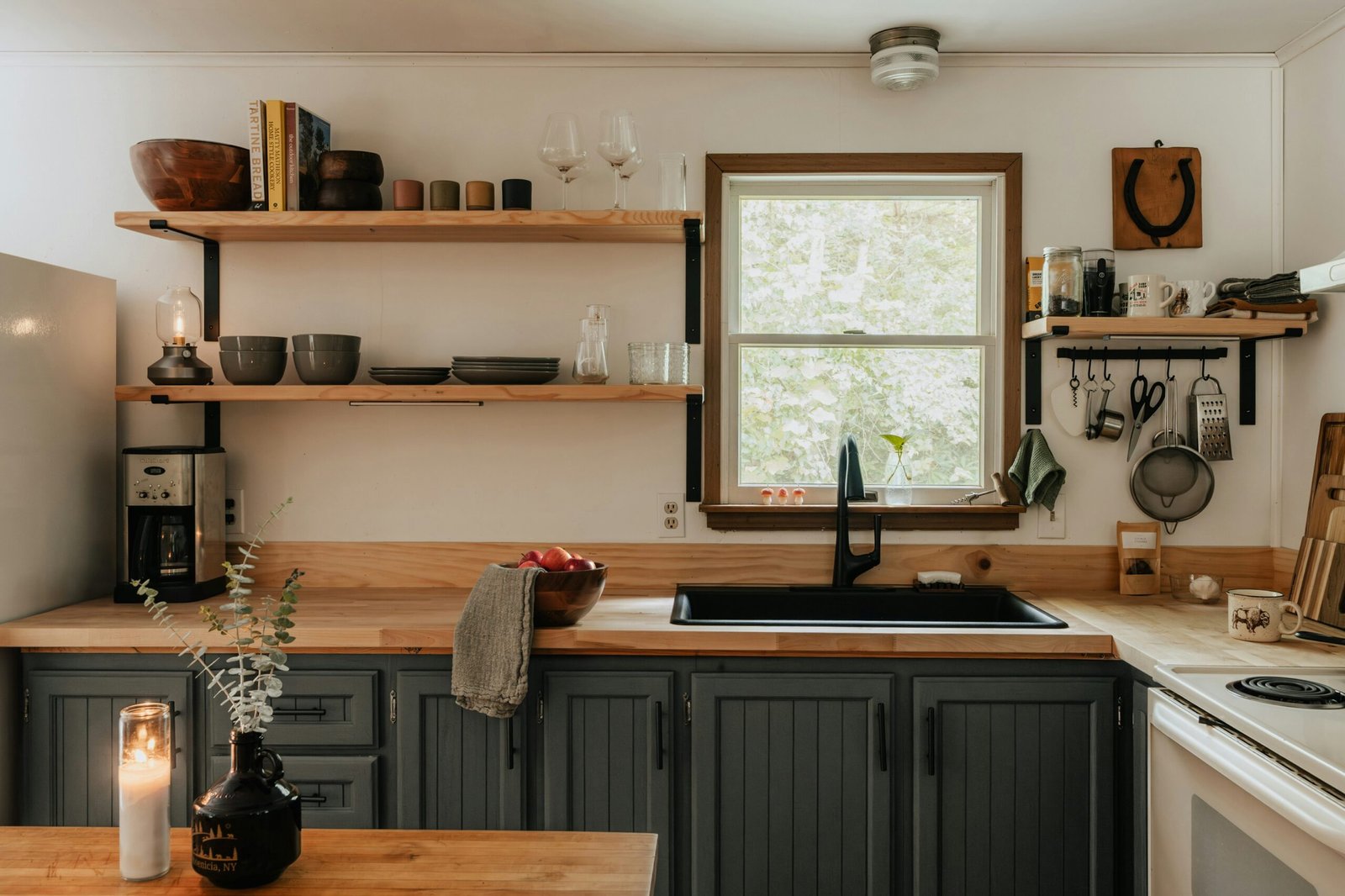
Many family homes have kitchens that feel too small for the amount of activity that happens in them. The answer is rarely a renovation — it’s using the space you have more intelligently. Vertical space is the most underused resource in almost every kitchen.
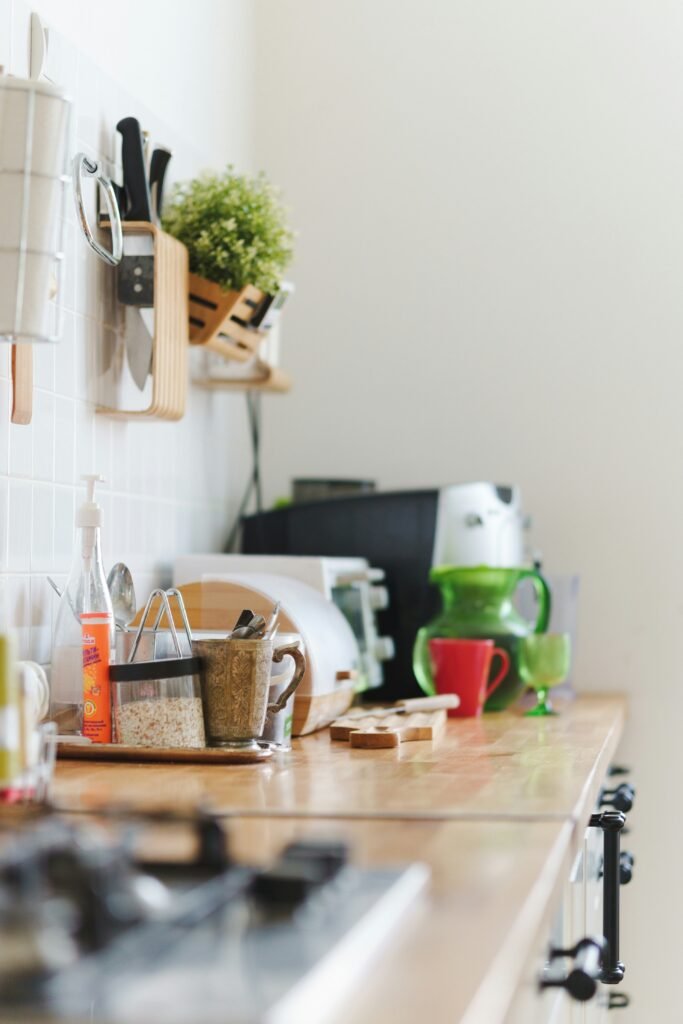
Wall-mounted magnetic knife strips free up a full drawer and keep knives safer and more accessible. Hooks inside cabinet doors hold measuring cups, pot lids, and cleaning supplies. A pegboard on an empty wall creates customizable, visible storage for pots, pans, and tools. Stackable shelf risers inside cabinets double the usable shelf space without adding any footprint. These are small investments that create significant extra room.
For families with young children, think carefully about what goes at low heights. Breakable items, sharp tools, and cleaning chemicals should be up high or in locked cabinets. Designating low cabinets and drawers for kids’ cups, plates, and snacks encourages independence — children can get their own items without asking, which reduces interruptions during cooking and teaches them where things belong from an early age.
Maintaining it: the five-minute daily reset
The secret to a kitchen that stays organized isn’t a big weekly clean — it’s a small daily reset. Five minutes at the end of each evening, before the kitchen is closed for the night, is all it takes to keep the system working.
Clear the counters, return anything that’s drifted from its zone, wipe down the main surfaces, and do a quick check of the sink. That’s it. Five minutes. When this becomes a family habit — when the kids know that after dinner everything goes back to its place — the kitchen essentially maintains itself. The deep reorganization you did once stays intact because the small daily habits prevent entropy from setting in.
Involve the children. Give each child an age-appropriate task in the daily reset — clearing their plate, putting away their cup, wiping the table. Beyond the practical help, it teaches them that the kitchen is a shared space with shared responsibility. That lesson pays dividends well beyond the kitchen itself.
The organized kitchen your family deserves
A truly organized kitchen doesn’t happen by accident — but it also doesn’t require perfection. It requires a clear system, a one-time investment of effort to set it up properly, and the simple daily habits to keep it going. Once it’s in place, the difference in your mornings, your evenings, and your overall stress levels is immediate and real.
You deserve to walk into your kitchen and find what you need without searching. Your kids deserve a space where they can find their snacks and pack their lunches independently. Your family deserves dinners that come together smoothly instead of in a cloud of frustration. Start with one zone, one drawer, one shelf — and build from there. Your future self, standing at the stove on a busy Tuesday evening, will thank you for it.