You’ve probably burned eggs in a stainless steel pan at least once. Or spent ten frustrating minutes scrubbing a skillet that promised to be “easy clean.” Or quietly wondered whether the flaking coating on your old non-stick pan was going to end up in your food.
You’re not alone. Non-stick cookware is one of the most purchased — and most misunderstood — categories in the entire kitchen. People buy it for the convenience, tolerate the limitations, and then replace it more often than they should because nobody told them the rules.
This guide is going to change that. By the end, you’ll know exactly what non-stick cookware is, what types are actually worth buying in 2026, how to use them safely, and how to make them last years longer than the average pan survives in most kitchens.
Why Non-Stick Cookware Exists — and Why It Still Matters
The premise is simple: a surface so smooth that food slides off with barely any oil, leaving cleanup almost effortless. It’s not a luxury feature. For many everyday cooking tasks — eggs, fish, crepes, pancakes, delicate vegetables — it’s genuinely the best tool for the job.
In Consumer Reports surveys, the majority of people who use non-stick cookware say their top reasons are that food doesn’t stick and it’s easy to clean. One in four say their top reason is that non-stick cookware allows them to use less oil — a real health benefit for anyone cooking daily.
The problem isn’t with the concept. The problem is that non-stick cookware has been surrounded by confusion, contradictory health claims, and genuinely poor advice for decades. In 2026, the category has matured significantly — and understanding it properly starts with the coatings.
The Two Main Non-Stick Coatings: What’s Actually in Your Pan
PTFE (Polytetrafluoroethylene) — The Traditional Non-Stick
You probably know PTFE by its brand name: Teflon. It’s been the dominant non-stick coating since the 1940s, and it remains exceptionally effective. The surface is extraordinarily slick — nothing bonds to it easily — which is precisely why it became the go-to for non-stick cookware worldwide.
Here’s where the confusion comes in: older PTFE manufacturing processes used a compound called PFOA, which raised legitimate health concerns. But modern PTFE pans made after 2013 contain no PFOA. None. If you’ve been worried about Teflon toxicity in recently manufactured pans, you can relax — the issue was with how older pans were made, not with PTFE itself.
PTFE coatings remain stable and release zero harmful compounds at normal cooking temperatures — anything below 500°F is safe. The real risks are overheating (never heat an empty non-stick pan on high), using metal utensils that scratch the coating, and continuing to cook in a pan whose coating is visibly damaged or peeling.
Ceramic Non-Stick — The Modern Alternative
Ceramic coatings use a sol-gel process to create a glass-like layer on the cooking surface — smooth enough that food can’t grip it, without using PTFE at all. Think of it as creating a hard, slick barrier between your food and the metal beneath.
In Consumer Reports’ most recent tests, non-stick frying pans with ceramic coatings performed admirably — beating out traditional non-stick pans for the top three slots. Ceramic has moved from trendy alternative to legitimate competitor, and in 2026 it’s the choice of most health-conscious cooks.
The trade-off: ceramic coatings perform best below 450°F and can lose their non-stick properties when repeatedly exposed to high heat. They’re also generally less durable than PTFE over the long term. The coating will degrade — but it will do so without releasing chemicals, which matters to many cooks.
Brands like GreenPan, Caraway, Our Place, and Made In are leading the ceramic non-stick category and are consistently recommended for their performance and transparency about materials.
The Non-Stick Coating That Isn’t: Hybrid Pans
One of the most interesting developments in 2026 is the rise of hybrid cookware — pans that combine stainless steel cooking surfaces with non-stick properties through a different mechanism. HexClad, the most prominent example, uses a laser-etched hexagonal pattern that allows oil to pool in the valleys while food contacts only the peaks, reducing sticking without a traditional coating.
These pans deliver serious searing capability alongside non-stick convenience — something traditional non-stick simply can’t do. They’re more durable, more versatile, and more expensive. For cooks who want one pan that does everything, they’re worth serious consideration.
Non-Stick vs. Stainless Steel: Understanding When to Use Which
One of the most important things to understand about non-stick cookware is what it’s bad at — because that knowledge determines when to reach for something else.
Non-stick surfaces prevent sticking so effectively that they also limit the browning reactions that build depth and flavor. When you sear a steak or chicken thigh in a non-stick pan, you’ll get cooked meat — but you won’t get the deep, caramelized crust or the fond (those flavorful browned bits) that become the foundation of restaurant-quality pan sauces. Non-stick works best at medium or lower temperatures, where coatings stay stable and food releases cleanly.
Stainless steel, by contrast, delivers serious heat tolerance and searing power. Quality stainless steel cookware lasts decades with proper care. It encourages fond development, handles high-heat cooking beautifully, and is dishwasher safe. The trade-off is that it requires more technique — you need to preheat it properly and use enough fat — and cleanup takes more effort.
The best-equipped kitchen has both. Use non-stick for eggs, fish, pancakes, crepes, and any delicate food where sticking is the enemy. Use stainless steel (or cast iron) for searing, browning, deglazing, and high-heat cooking where flavor development is the goal.
How to Choose the Right Non-Stick Pan: A Practical Buying Guide
With dozens of options at every price point, here’s how to cut through the noise.
Material and construction matter most. The pan beneath the coating determines heat distribution, durability, and weight. Hard-anodized aluminum (like the All-Clad HA1, a top performer in 2026 expert tests) offers excellent heat conduction, even cooking, and durability that outlasts standard aluminum by a significant margin. Heavier gauge material means fewer hot spots and more consistent results.
Induction compatibility is worth checking. Not all non-stick pans work on induction cooktops, which require a magnetic base. If you cook on induction — or think you might in the future — verify compatibility before buying.
Oven safety expands your options. The best non-stick pans are oven-safe to at least 400°F, giving you the ability to start a dish on the stovetop and finish it in the oven. Some premium options handle up to 500°F, which significantly expands how you can use them.
Handle design matters more than you think. Ergonomically designed handles that stay cool during cooking, are securely riveted, and don’t wobble — these seem like small details until you’re moving a hot pan and the handle shifts. Test weight distribution in your hand if possible, or read hands-on reviews that assess this specifically.
Choose the right size for your cooking. A 10-inch skillet is the versatile everyday workhorse — handles two to three eggs, a single piece of fish, or a standard portion of vegetables. A 12-inch pan is better for cooking for families, sautéing larger quantities, or fitting multiple pieces of protein at once. Many cooks find owning both sizes eliminates the need for any other non-stick pan.
The Rules That Actually Make Non-Stick Last
Most people replace their non-stick cookware far more often than necessary — not because the coating failed, but because they didn’t follow a few basic principles. These aren’t complicated, but they make an enormous difference.
Use low to medium heat. This is the single most important rule. Non-stick coatings are designed for low to medium heat cooking. High heat degrades the coating faster than any other factor. Never preheat an empty non-stick pan on high heat, and never use non-stick for high-heat searing. Match the pan to the task.
Use the right utensils. Metal utensils scratch non-stick surfaces and accelerate coating breakdown. Silicone, wood, and nylon are your tools of choice. This is non-negotiable.
Season your pan before first use. Before your pan’s debut, wash it with warm soapy water and dry it completely. Apply a thin layer of cooking oil to the surface, heat on medium-low for two minutes, let it cool, and wipe clean. This process fills microscopic pores in the coating, improving non-stick performance from the very first use.
Hand wash whenever possible. Dishwashers can degrade coating durability faster than hand washing. A quick wash with a soft sponge and dish soap takes thirty seconds and preserves your pan significantly longer.
Store carefully. Stacking pans without protection scratches coatings. Use pan protectors, a dedicated rack, or hang them if your kitchen allows. The coating on the cooking surface is the most valuable part — protect it accordingly.
Know when to replace. If food is sticking during normal use, the coating is visibly peeling or chipping, or the base has warped, it’s time for a new pan. A damaged non-stick coating isn’t salvageable, and cooking in a pan with a compromised surface defeats the entire purpose. Non-stick pans typically need replacement every two to five years with regular use — which is completely normal. Build that expectation into your kitchen budget.
The Best Non-Stick Cookware Brands in 2026
For traditional PTFE non-stick, the All-Clad HA1 Hard Anodized series leads expert tests with consistent heat distribution, durable coating, and induction compatibility. Calphalon Premier Hard-Anodized excels for speed of heating and cooking evenness.
For ceramic non-stick, GreenPan’s Valencia Pro line stands out for its smooth ceramic coating, induction compatibility, and stronger durability than typical ceramic options. Caraway has earned devoted fans for its design-forward aesthetic and transparency about materials. Our Place’s Always Pan remains a remarkable multi-purpose option, replacing up to ten traditional pieces of cookware in a single versatile pan.
For budget-friendly performance, Tramontina consistently delivers results that punch well above their price point — cooking skin-on fish and scrambled eggs without sticking and browning vegetables to a crispy texture without burning.
Final Thoughts
Non-stick cookware isn’t going anywhere. For everyday cooking — particularly for the foods most people eat most often — it remains one of the most practical tools in the kitchen. The key is choosing it wisely, using it correctly, and replacing it without guilt when the time comes.
In 2026, you have better options than ever: cleaner ceramic coatings, more durable PTFE alternatives, and hybrid pans that bridge the gap between non-stick and stainless steel. The information exists to make a smart choice. Now you have it.
Buy well. Cook on medium heat. Use silicone spatulas. And enjoy the effortless slide of a perfectly cooked egg in the morning.
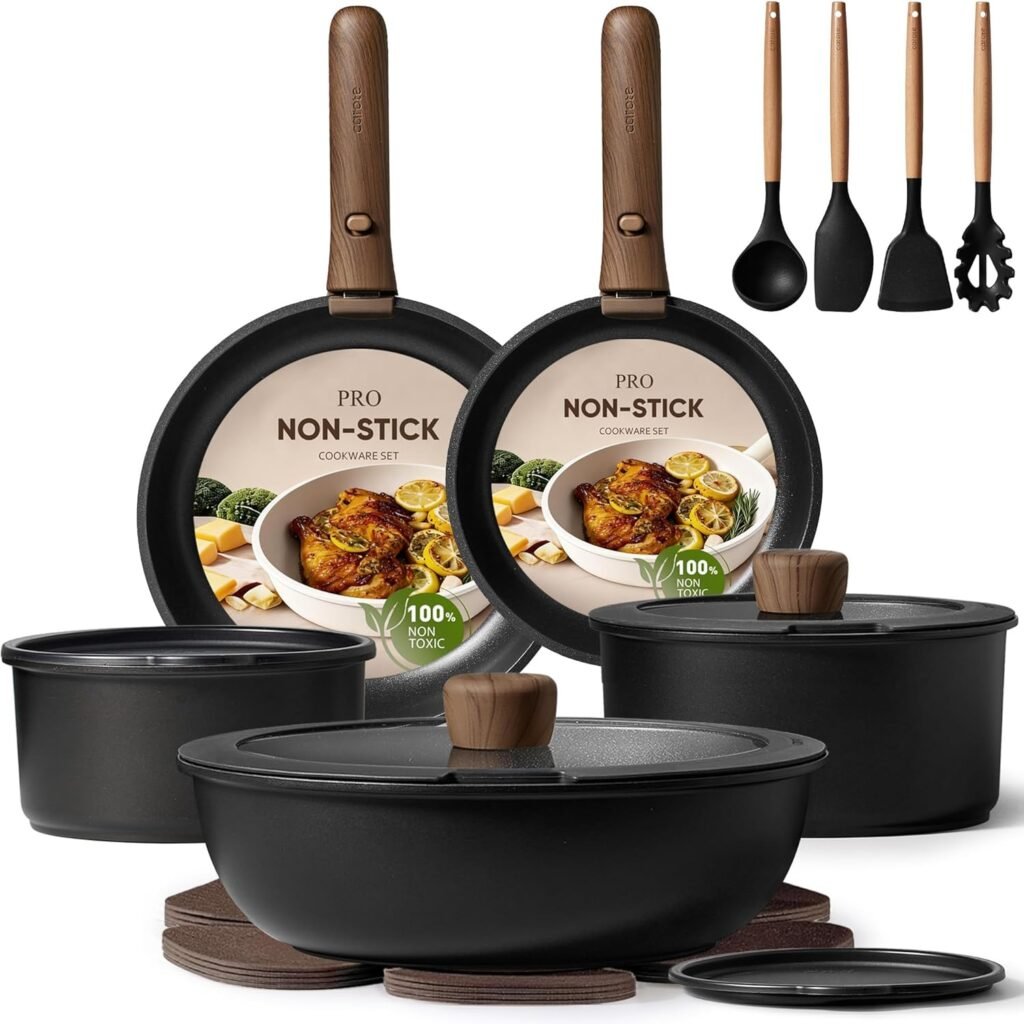
Smart Cooking Made Simple: CAROTE 19pcs Set
The CAROTE 19pcs Pots & Pans Set is perfect for modern kitchens where space and convenience matter. Its detachable handle lets you easily switch from stovetop to oven, fridge, or table—and stack everything neatly to save space.
With a nonstick coating, cooking becomes healthier and cleanup is effortless—no more scrubbing. Plus, it delivers even heat distribution for better cooking results every time.
It’s also induction-compatible, dishwasher safe, and oven safe, making it a versatile all-in-one solution for everyday cooking.
Final Thought: A smart, space-saving cookware set that makes cooking easier, cleaner, and more flexible.
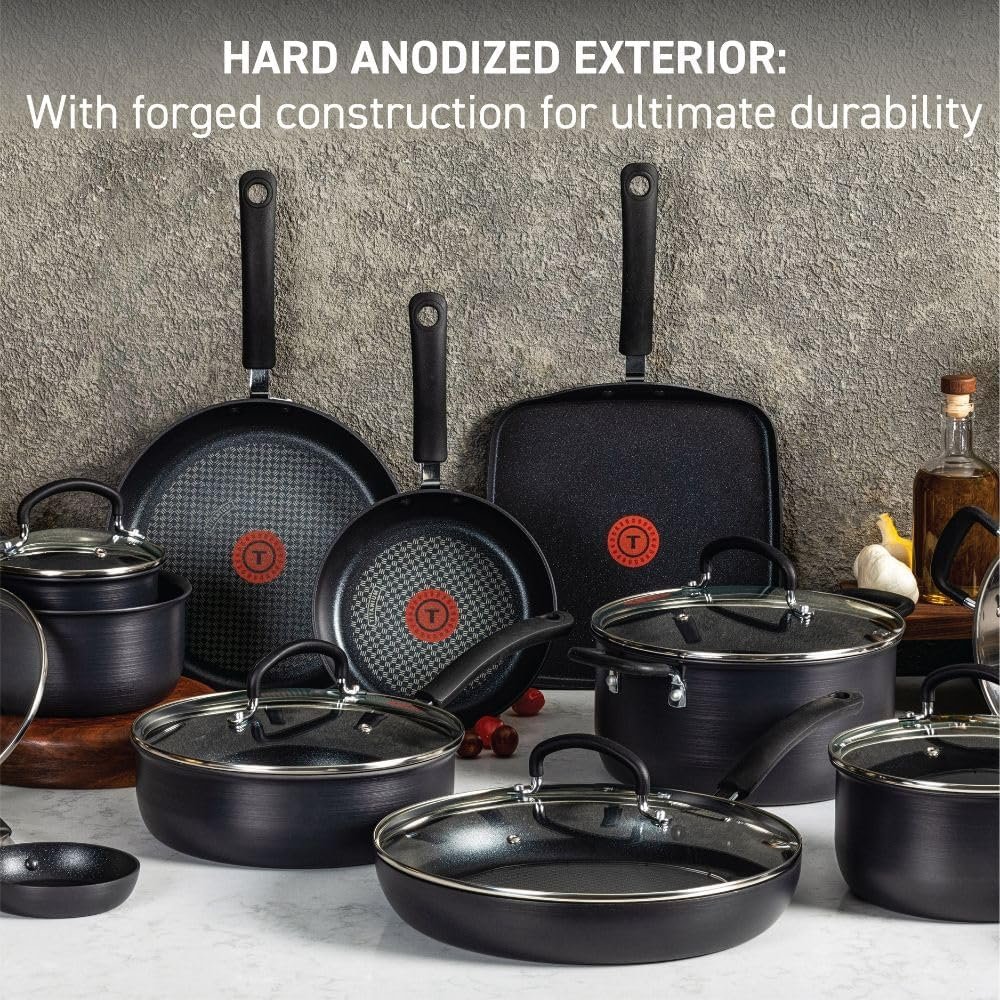
Cook Like a Pro: T-Fal 17-Piece Nonstick Cookware Set
The T-Fal Ultimate 17-Piece Cookware Set is built for everyday cooking with strong hard-anodized construction that resists wear and lasts long. Its titanium nonstick coating makes cooking smooth and cleanup quick—no more stubborn food sticking.
What makes it special is the Thermo-Spot heat indicator, which turns red when the pan is perfectly preheated—helping you cook with better timing and results.
With a complete 17-piece set, including fry pans, saucepans, a griddle, and a Dutch oven, it covers all your kitchen needs in one go.
Final Thought: A reliable, all-in-one cookware set that makes everyday cooking easier, faster, and more enjoyable.